
Announcing the Launch of the UK Game Dev Group Alliance Connecting Regional Game Communities Across the UK

The UK games industry thrives on creativity and innovation.
Yet, many developers and studios outside major cities face challenges connecting with peers and accessing resources.
Across the UK, brilliant people are already doing the work.
They're organising meetups, running game jams, hosting showcases, supporting students, helping new developers find their feet, connecting studios with opportunities and building communities from the ground up.
But for a long time, much of that work has happened in isolation.
A community in one region might have solved a problem that another community is struggling with.
A funding opportunity might be perfect for developers in another part of the country.
A policymaker might want to understand what's happening in regional games development but have no easy way to reach the communities actually doing the work.
UKGG creates the connection.
We give independent regional hubs a way to share knowledge, collaborate on common challenges, raise issues collectively and make their voices heard nationally, while remaining independently run and locally focused.

UKGG isn't here to replace existing communities.
Quite the opposite.
The strength of the UK games ecosystem comes from its diversity, and every region has different needs and strengths.
Our member hubs remain independent. They continue to run their own events, communities and programmes according to what works locally.
UKGG provides the framework that allows them to work together.
Our model is based on cooperation and equal representation, ensuring that regional communities have a meaningful role in shaping the Alliance and its priorities.
We are currently operating in a pre-CIC pilot phase, using this period to test and refine our structure before formally incorporating as a Community Interest Company.
Our intention is for UKGG to remain focused on its purpose rather than generating profit, with any surplus reinvested into supporting the UK games ecosystem.
What we've already been doing
UKGG may be newly launched, but the work started long before the website.
Our regional hubs have already been collaborating behind the scenes to support developers, freelancers, studios, students and community organisers across the country.
Sharing knowledge between communities
Running a games community comes with hundreds of practical challenges.
Where do you find an affordable venue?
How do you make an event genuinely accessible?
What legal structure makes sense?
How do you attract attendees?
How do you find speakers, sponsors or volunteers?
UKGG gives organisers a place to share the answers they've already discovered.
By sharing experience between regions, we can help communities avoid reinventing the wheel and help new organisers get started faster.
Finding funding and opportunities
Funding opportunities can be difficult to discover, particularly for small studios and developers outside the traditional industry centres.
UKGG helps regional hubs share relevant grants, funding opportunities and industry initiatives across the network, making it easier for useful opportunities to reach the people who need them.
Supporting important industry initiatives
Regional communities see the realities of the games industry at grassroots level.
That gives us an important perspective when national initiatives and policies are being discussed.
UKGG has already worked collectively on letters of support and advocacy around issues affecting the sector, including supporting the continuation of the UK Games Fund.
Our aim is not to dictate policy.
It is to make sure the experiences of developers and communities across the country are part of the conversation.
Turning regional insight into national change
One of our clearest examples of this is our work with the Office for National Statistics (ONS) on the UK's Standard Industrial Classification codes.
For years, games businesses have often been forced into broad classifications designed for generic software development or other industries.
That made it difficult to accurately understand the size, structure and regional distribution of the games sector.
UKGG brought together the experiences of regional communities that had encountered these problems first-hand, gathered feedback from across our network and worked collectively on proposals for greater granularity.
The resulting work contributed to more specific classifications for game development and publishing, including distinctions between original game development, development services, and tools, engines and middleware.
It may sound like a technical change.
But accurate data matters.
If we cannot accurately identify where games businesses exist, what they do and how regions contribute to the industry, it becomes harder to make informed decisions about funding, economic development, investment and policy.
This is exactly why connecting regional voices matters.
Local knowledge can create national change when we work together.
Building a better picture of the UK games ecosystem
Connection isn't only about conversations between organisers.
It's also about making the ecosystem easier for everyone else to navigate.
That's why we're building the UKGG Directory.
The UK is full of games communities, hubs, meetups and organisations, but knowing that they exist isn't always enough. People need to be able to find them.
The directory is designed to become a living map of the UK's regional games ecosystem, built with the communities themselves.
If you know about a games hub that isn't listed, you can submit it.
If you're part of an existing hub, you can help make sure its information stays accurate.
And if you're a developer looking for your local community, the directory gives you somewhere to start.

Helping new communities grow
UKGG isn't only for established hubs.
One of our ambitions is to make it easier for new regional communities to form.
You shouldn't need years of experience organising events to create a useful developer community in your area.
By connecting new organisers with people who have already done it, UKGG can provide practical guidance, shared resources and a network of experienced organisers to learn from.
Because every established community started somewhere.
A voice for regional games development
UKGG also provides a mechanism for connecting regional insight with national conversations.
Collectively, our member hubs represent thousands of people working across the UK games ecosystem.
That gives us the ability to identify common challenges, gather regional intelligence and provide a clearer picture of what is actually happening outside the traditional industry centres.
We want policymakers, funders, industry organisations and potential partners to have a better route into the regional games ecosystem.
And we want regional communities to have a better route into those conversations.
It's a two-way connection.
What we're building
UKGG is still young.
That is intentional.
We're building the foundations carefully, with the communities themselves helping shape what comes next.
Our priorities include:
Connecting regional games hubs across the UK.
Sharing knowledge, resources and opportunities between communities.
Improving the visibility of regional games development.
Supporting existing and emerging community organisers.
Representing regional perspectives in national industry conversations.
Gathering better regional intelligence and data.
Helping developers discover communities and opportunities outside their immediate networks.
Supporting initiatives that strengthen the long-term sustainability of the UK games sector.
Ultimately, we want to create an ecosystem where geography is less of a barrier to participation.
Where a developer in Cornwall can discover opportunities in Scotland.
Where a new organiser in Wales can learn from an established community in London.
Where a policymaker can understand what is happening at grassroots level.
Where communities don't have to solve the same problems independently.
And where regional games development is recognised as an essential part of the UK's wider games industry.
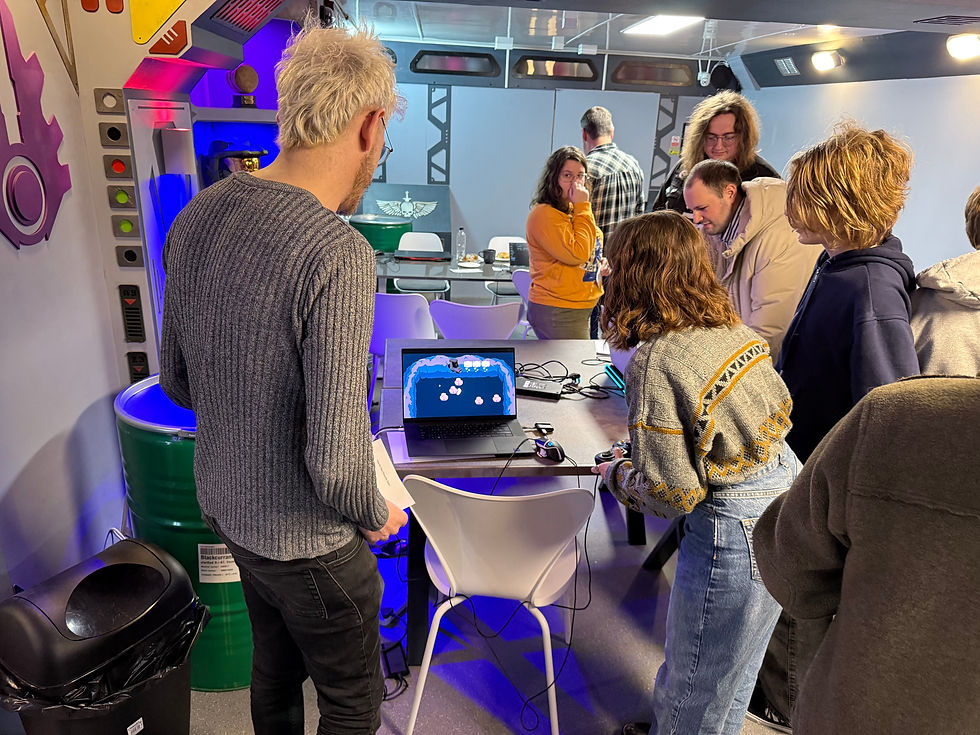
What This Means for UK Game Developers and Organisations
For developers, UKGG means easier access to local communities and resources. It reduces isolation and opens doors to collaboration and learning. Developers can find peers nearby or connect with groups across the UK.
For studios and educators, UKGG provides regional intelligence and a clearer picture of the UK games landscape. This helps with planning, funding, and partnerships. It also ensures that voices from outside traditional centres are heard.
The alliance strengthens the entire UK games ecosystem. It builds connections that support growth, innovation, and diversity.
Join the UK Game Dev Group Alliance
The launch of UKGG marks a new chapter for UK game development. It offers a national network built from the ground up, connecting regional communities and amplifying grassroots voices.
Developers, studios, educators, and organisations can benefit from joining or supporting UKGG. The alliance provides tools, events, and a platform for collaboration. It makes the UK games industry more inclusive and easier to navigate.
Explore the UKGG Directory to find your local community or learn more about the alliance’s work on UK SIC codes and other initiatives.
Together, UKGG helps build a stronger, more connected UK games industry.
The UK Game Dev Group Alliance is a clear example of how grassroots collaboration can solve real problems. It connects regional hubs, shares knowledge, and brings local voices into national conversations. This network makes the UK games development ecosystem easier to navigate and more inclusive for everyone.
The future of UK game development looks brighter with UKGG at its centre.
Join the movement and help shape the industry’s next chapter.
The UK doesn't need one giant community.
It needs its communities to be connected.
The talent is already here.
The communities are already here.
The work is already happening.
UKGG exists to connect it.
Comments